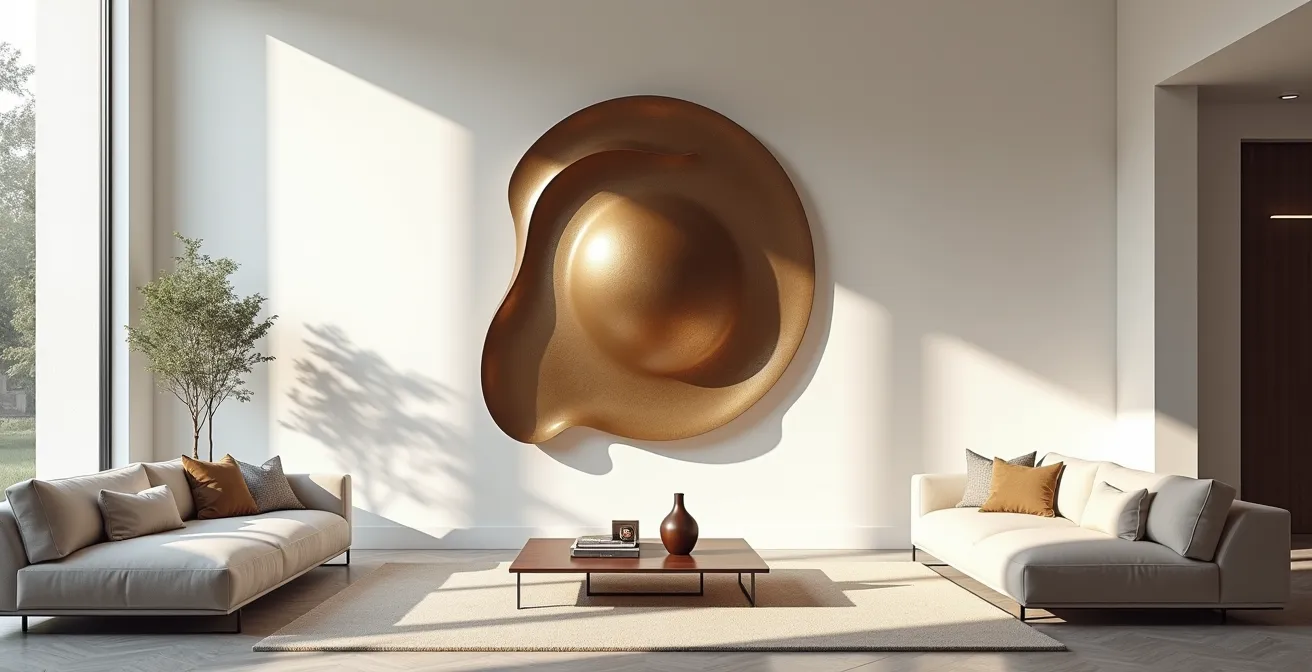
A sculpture’s true power isn’t in what it depicts, but in how it commands the space, light, and volume around it.
- It acts as an “architect of light,” actively creating drama, casting shadows, and defining the mood of a room.
- Its material (bronze, resin) and scale are not just aesthetic choices; they dictate the room’s emotional tone and perceived dimensions.
Recommendation: Approach your first sculpture not as a decorative object to fill a void, but as a strategic spatial decision that will redefine the entire room.
You’ve chosen the perfect paint color. The sofa is a masterclass in comfort and style. Yet, you stand back and feel that something essential is missing—a soul. Many homeowners believe the solution lies on the wall, investing in a large painting or a curated gallery of prints. While these add personality, they often fail to fundamentally alter the spatial experience. The room remains a container for beautiful things, rather than becoming a dynamic environment in itself.
But what if the answer isn’t on the wall, but in the room? This is where sculpture enters the conversation, not as a mere accessory, but as a piece of functional architecture. Unlike a painting, which is a window to another world, a sculpture occupies our world. It possesses volume, displaces air, and demands a physical relationship with its surroundings. It becomes a volumetric anchor, a point of gravity that manipulates a room’s light, flow, and emotional blueprint in a way flat art simply cannot.
Thinking like a designer means seeing sculpture as an active participant in your home’s design. This guide will move beyond simple decoration to explore the spatial mechanics of 3D art. We will delve into how to choose materials that tell a story, use light to create drama, master scale to avoid common mistakes, and even commission a piece that is uniquely yours. It’s time to stop decorating your space and start sculpting it.
This article provides a complete framework for integrating three-dimensional art into your home. Explore the sections below to understand the key decisions involved in making sculpture a transformative element in your interior design.
Summary: The Power of Three-Dimensional Art in Interior Spaces
- Bronze vs. Resin: Which Material Survives a House with Kids and Pets?
- How to Light a Sculpture to Create Drama in a Dull Corner?
- The Scaling Error That Makes Expensive Sculptures Look Cheap in Small Rooms
- How to Commission a Local Sculptor Without Going Over Budget?
- What Does Abstract Sculpture Actually Mean and How to Talk About It?
- Why Roman Concrete Gets Stronger with Time While Ours Cracks?
- How to Carve Out a Hobby Station in a 500 sq ft Apartment?
- Why Reading Buildings Tells You More About a City Than a Guidebook?
Bronze vs. Resin: Which Material Survives a House with Kids and Pets?
The choice between bronze and resin isn’t just about aesthetics; it’s a decision about the life and story of the piece within your home. Each material has a distinct material narrative. Bronze is a legacy material; it’s heavy, permanent, and carries the weight of history. It doesn’t simply exist in a space; it anchors it. In a busy household, a bronze sculpture absorbs life. Minor impacts don’t ruin it; they add to its character, becoming part of its evolving patina. This living finish is a delicate surface of chemical compounds that requires care, but its beauty is in how it matures over time, much like a living organism.

Resin, on the other hand, is the chameleon of the art world. It’s lighter, more affordable, and can mimic other materials like stone or metal. This makes it a versatile and accessible choice for introducing sculptural forms without the significant investment of bronze. While durable, it is more susceptible to chipping or cracking from a major impact and its color can fade with prolonged UV exposure. Choosing between them depends on your vision: do you want a timeless heirloom that ages with your family, or a versatile statement piece that offers form and color at a more accessible price point?
To make an informed decision, it’s helpful to see a direct comparison of their properties. A recent comparative analysis breaks down the key differences for homeowners.
| Material | Impact Resistance | Aging Process | Maintenance | Cost Range |
|---|---|---|---|---|
| Bronze | Excellent – develops character with impacts | Develops unique patina over time | Annual waxing recommended | $3,000-50,000+ |
| Resin | Good – may chip or crack | Color may fade with UV exposure | Simple cleaning, occasional polishing | $200-5,000 |
How to Light a Sculpture to Create Drama in a Dull Corner?
A sculpture is only half of the artwork; the other half is the light that reveals it. Placing a beautiful piece in a room without considering its lighting is like hanging a painting in the dark. The right lighting transforms a static object into a dynamic performance of highlight and shadow. It makes the sculpture an architect of light, capable of turning a forgotten corner into a dramatic focal point. The goal isn’t just to illuminate the piece, but to control how its form interacts with the walls and space around it.
There are several techniques to achieve this. Uplighting a sculpture from a low angle will cast elongated, dramatic shadows on the wall behind it, exaggerating its height and form. Using a narrow-beam spotlight allows you to be surgical, highlighting a specific curve or texture you want to emphasize. For translucent materials like glass or certain resins, backlighting is magical, causing the sculpture itself to glow as if it has an internal energy source. As a design team at Fratantoni Design highlights, the key is balancing these bold lighting choices with enough negative space to let the composition breathe. By layering different light sources—ambient, accent, and even backlight—you give the sculpture a three-dimensional presence that changes throughout the day.
To start creating this drama, consider these professional techniques:
- Position uplights at a 30-45° angle to create elongated shadows on walls.
- Install color-changing smart bulbs to shift the mood from a cool morning (5000K) to a warm evening (2700K).
- Use narrow beam spotlights (10-15°) for precise highlighting of sculptural details.
- Create striking silhouettes by placing lights 2-3 feet behind translucent sculptures.
- Layer ambient, accent, and backlight sources to achieve a truly three-dimensional drama.
The Scaling Error That Makes Expensive Sculptures Look Cheap in Small Rooms
One of the most common mistakes in interior design is a misunderstanding of scale. It’s an intuitive error: big room, big art; small room, small art. But with sculpture, this logic is flawed and can lead to expensive pieces looking awkward or insignificant. A sculpture’s impact is not just about its own size, but about its relationship to the negative space around it. An oversized sculpture crammed into a small room feels claustrophobic and aggressive. Conversely, a tiny sculpture lost in a vast room can feel like a forgotten trinket.
As the Belaré Home Design Team notes, “Sculptures shape the ambiance of a room, crafting an interplay of form and shadow that dances with the natural light.” This shaping of ambiance is entirely dependent on proper scaling. In a smaller room, instead of one large piece, consider a curated grouping of several smaller sculptures on a shelf or console table. Varying their heights and forms creates a dynamic visual journey for the eye, making the collection feel like a single, intentional installation that is perfectly proportioned to the space.
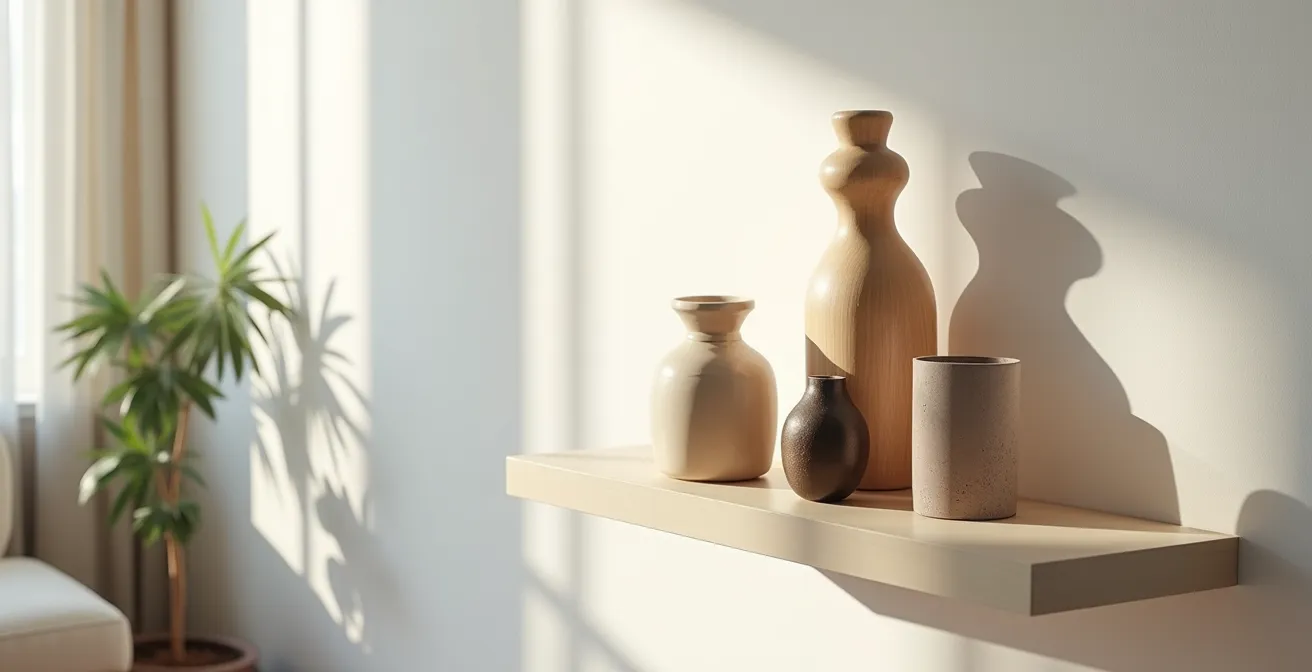
In a large room with high ceilings, a small sculpture can still command attention if placed correctly. Instead of leaving it on a low table, give it presence by placing it on a sleek, tall pedestal. This gives the artwork its own defined territory, creating a focal point that draws you in. The pedestal becomes part of the artwork, lifting it into the viewer’s direct line of sight and honoring its importance. The secret is to ensure the sculpture has breathing room, allowing its silhouette to be clearly read against its background. The volume of empty space around the piece is just as important as the volume of the piece itself.
How to Commission a Local Sculptor Without Going Over Budget?
Commissioning a custom sculpture may sound like a luxury reserved for seasoned art collectors, but it can be a surprisingly accessible way to acquire a piece that is perfectly tailored to your space and story. The key is to approach the process with a clear strategy and open communication. It transforms you from a consumer into a collaborator, creating a spatial dialogue with an artist to bring a shared vision to life. The fear of an uncontrolled budget often deters homeowners, but a structured approach can ensure the project remains within financial reach.
The first step is research. Identify local artists whose style resonates with you through local galleries, art school exhibitions, or even Instagram. Don’t be afraid to start small. Commissioning a small, preliminary model, or “maquette,” is a low-risk way to test the collaborative chemistry and see your idea in three dimensions before committing to a full-scale piece. During this phase, be transparent about your budget. An artist can often suggest alternative materials or techniques to meet your price point. For instance, a piece conceived in bronze might be achievable in cold-cast resin for a fraction of the cost, without compromising the form.
To ensure transparency, always request an itemized quote that breaks down the costs: typically 30-40% for materials, 40-50% for labor and studio time, and 10-20% for the conceptual design fee. A phased commission, where you pay for the design phase first and then the production phase upon approval, provides another layer of financial control. This turns the commission from a daunting leap of faith into a manageable, step-by-step partnership.
Your Action Plan for Commissioning an Artist on Budget
- Points of Contact: Identify potential local artists by visiting galleries, art school shows, and exploring online platforms. Create a shortlist of 2-3 whose style aligns with your vision.
- Collect & Inquire: Gather their portfolios and reach out. To start the conversation, request an initial quote for a small-scale concept model (a maquette) to test the collaboration.
- Coherence & Budgeting: Confront their artistic style with your home’s aesthetic. Openly discuss material alternatives, like swapping bronze for a more affordable cold-cast resin, to align the project with your budget.
- Collaboration & Trust: Assess the creative dialogue. Does the artist understand your vision and emotional goals for the piece? A strong partnership is key to a successful commission.
- Plan & Integrate: Finalize the commission with a phased plan (design approval first, then production) and an itemized contract that clearly outlines costs for materials, labor, and the artist’s fee. For more ideas on how this process can be structured, some galleries offer guidance.
What Does Abstract Sculpture Actually Mean and How to Talk About It?
Standing before an abstract sculpture can be intimidating. Our brains are wired to identify patterns and objects, so when faced with a form that resists easy categorization, the most common question is, “What is it supposed to be?” This question, however, is a trap. It sets you up for frustration because abstract art is rarely “supposed to be” anything literal. To appreciate it, you must shift your mindset from identifying to experiencing. It’s not about what it looks like; it’s about what it *does*.
A more powerful question is, “What is it doing?” This simple change opens up a new way of seeing. Is the form twisting, ascending, collapsing, or reaching? Is it heavy and grounded, or light and airy? An abstract sculpture is a frozen gesture. It’s pure energy, movement, and emotion given solid form. Instead of searching for a noun (a person, a tree, a house), you should look for verbs. This allows you to connect with the piece on an intuitive level. As one art consultancy suggests, focusing on what the work is ‘doing’ can unlock a deeper appreciation for its form and energy. An excellent framework from an interior design perspective encourages this verb-based approach.
When you talk about an abstract piece, focus on your personal response. Does it feel protective or vulnerable? Joyful or somber? There are no wrong answers. It’s an emotional blueprint, and your reaction is part of the artwork’s meaning. Also, pay attention to the material itself. Notice how light plays across its surfaces, how the shadows fall, and whether the texture invites touch. By describing these tangible qualities—movement, emotion, and materiality—you can have a rich, meaningful conversation about abstract art without ever needing to ask, “What is it?”
Why Roman Concrete Gets Stronger with Time While Ours Cracks?
The enduring mystery of Roman concrete, which self-heals and strengthens over millennia, holds a powerful lesson for interior design: the profound beauty of materials that embrace time. While modern materials often fight against aging, certain classical materials used in sculpture welcome it, developing a character and depth that newness cannot replicate. This concept is central to using sculpture to create a sense of permanence and history within a space, even a brand-new one. The goal is to choose materials that have a material narrative of their own.
Bronze is the quintessential example in the art world. A new bronze sculpture is beautiful, but a century-old bronze is sublime. Over decades, exposure to air and the oils from human hands triggers a slow chemical reaction, creating a unique surface called a patina. This isn’t decay; it’s a form of maturation. The greens, blues, and deep browns that emerge are a physical record of the sculpture’s life and environment. As noted by conservation specialists, bronze sculptures develop this unique patina through the slow formation of chemical compounds over decades. This process of graceful aging imbues the object with a soul and a story that transcends fleeting design trends.
By selecting sculptures made from timeless materials like bronze, stone, or hardwood, you are intentionally weaving a sense of history into your home. These pieces feel anchored and significant, providing a counterpoint to the disposable nature of modern consumer culture. They suggest that the home is not just a backdrop for a season of life, but a vessel for generations of stories. Like the Roman Pantheon, a space containing such an object feels like it is built to last, gaining strength and character with every passing year.
How to Carve Out a Hobby Station in a 500 sq ft Apartment?
In a compact living space, every square foot is precious. The idea of dedicating space to a purely decorative object can seem like an impossible luxury. However, this is where the versatility of sculpture shines. By re-imagining the role of 3D art, you can “carve out” a station for contemplation or aesthetic enjoyment without sacrificing functionality. The key is to select pieces that are either multi-purpose or expertly scaled to command a small zone without overwhelming it. This is not about adding clutter; it’s about making a deliberate, space-enhancing artistic statement.
One effective strategy is to choose functional sculptures. These are objects that blur the line between art and furniture. Think of a beautifully carved wooden side table, a lamp with a sculptural base that casts artistic shadows, or an elegant room divider that is both a visual barrier and a work of art. These pieces serve a practical purpose while fulfilling the role of a sculpture, introducing form and texture into your daily life without demanding any additional floor space. Wall-mounted sculptures, or reliefs, are another brilliant solution for small apartments, offering three-dimensional interest with a zero-footprint profile.
For a more dedicated “contemplation station,” you don’t need much space. A small window ledge, a corner of a bookshelf, or a narrow wall-mounted shelf can become a miniature gallery. Here, a single, exquisite small sculpture placed on a modest pedestal can create a powerful focal point. This creates a quiet, intentional moment in your home—a visual pause that offers a sense of serenity and focus. This approach transforms a small nook into a destination, proving that you don’t need a large home to live with meaningful art.
The following table illustrates how different types of sculpture can be integrated into small spaces, demonstrating that art and function can coexist beautifully.
| Type | Space Impact | Dual Purpose Examples | Best Placement |
|---|---|---|---|
| Functional Sculpture | No additional space needed | Sculptural side tables, artistic lamps, decorative room dividers | Living areas, bedside |
| Wall-Mounted | Zero floor space | Relief sculptures, artistic wall hooks, shadow-casting pieces | Hallways, above furniture |
| Contemplative Station | 2-3 sq ft dedicated | Small pedestal sculpture, meditation focus object | Corner nook, window ledge |
Key Takeaways
- Sculpture is an active element that shapes space, volume, and light, not a passive decoration to be placed.
- The interplay of light and shadow is as critical as the object itself; use directional lighting to create drama and mood.
- Scale is about the relationship between an object and its surrounding negative space, not just the size of the room.
Why Reading Buildings Tells You More About a City Than a Guidebook?
An architecturally significant building tells the story of its era—its values, its technology, its aspirations. It communicates through form, material, and its relationship to light and human scale. In exactly the same way, a sculpture acts as a piece of micro-architecture within a room, telling the story of the space. It defines zones, directs flow, and establishes a narrative in a way that is far more profound than a simple decorative object. Understanding this parallel is the final key to unlocking a sculpture’s transformative power.
As the experts at Fratantoni Design put it, “Sculptural interiors use architecture, furniture, lighting, and millwork as artistic forms… like a ribbon of marble, a fireplace carved from stone like an abstract sculpture.” A well-placed sculpture enters into a spatial dialogue with the room’s existing architecture. The curve of a piece might echo a rounded doorway, or its sharp angles might complement the grid of window panes, creating a visual rhyme that makes the entire space feel cohesive and intentional. It can serve as a focal point that anchors a seating area or a visual punctuation mark that signifies the transition from one area to another.
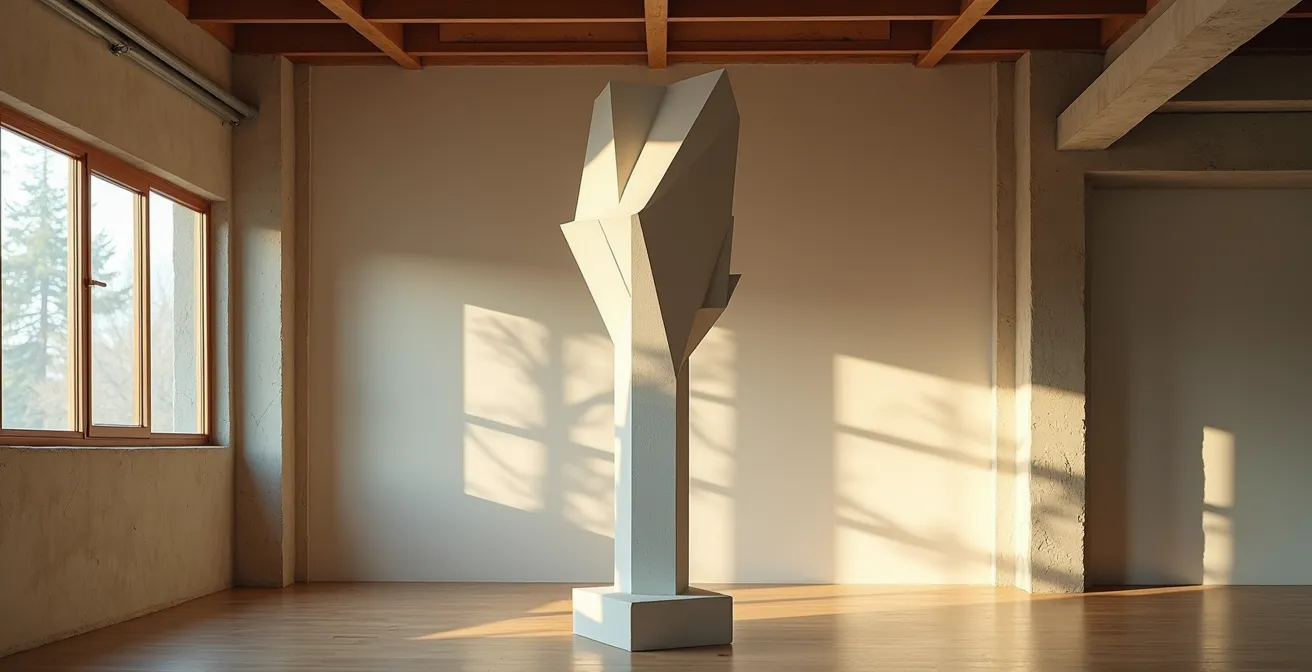
Ultimately, flat art hangs on the architecture, but sculpture *is* architecture. It carves out its own space, casts its own shadows, and commands its own presence. It forces you to walk around it, to view it from different angles, and to experience the room in a new way. It doesn’t just add to the space; it fundamentally redefines it. By learning to read the architectural qualities of sculpture, you move from being a decorator to being a true shaper of space, creating an environment that has depth, character, and a story to tell.
Start by observing your own home not as a series of surfaces to be decorated, but as a volume of space to be sculpted. Identify the corners that lack drama, the sightlines that need an anchor, and the areas that crave a narrative. This is the first step toward transforming your living space into a living work of art.
Frequently Asked Questions about Integrating Sculpture
Can sculptural elements be functional as well as artistic?
Yes. Many designers specialize in integrating functional beauty, such as sculptural kitchen islands, built-in wall features, and architectural lighting that serve a dual purpose as both essential elements and captivating artworks.
How do I avoid overly trendy sculptural choices?
The key is to focus on timeless forms and materials. Working with an experienced designer or architect can help you balance bold, contemporary shapes with a sense of timeless restraint, ensuring your investment transcends fleeting trends.
What’s the typical cost range for custom sculptural installations?
The cost varies widely based on material, complexity, and the artist’s reputation. Custom sculptural elements can range from around $5,000 for smaller accent pieces to well over $50,000 for major architectural features like a custom staircase or large-scale installation.