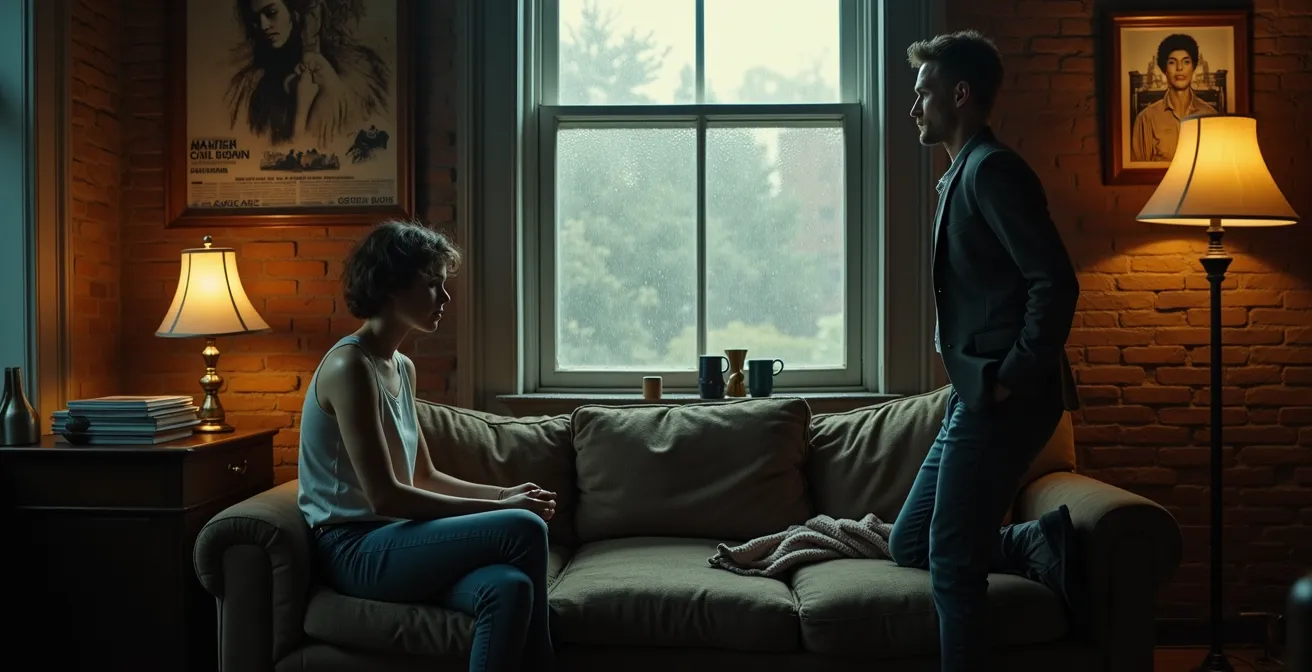
The realism you crave in cinema is not an accident of art, but a direct consequence of the independent film economy.
- Alternative funding models like crowdfunding grant directors the creative control to explore ambiguous, non-commercial endings that reflect real life.
- Cinematic styles such as ‘slow cinema,’ often born from budgetary necessity, respect viewer intelligence and allow complex, unspoken emotions to unfold naturally.
Recommendation: To find these films, learn to decode festival lineups and actively support curated streaming platforms that pay directors fairly, thereby investing in a more authentic kind of storytelling.
There is a particular kind of cinematic fatigue that sets in after watching another perfectly polished, high-stakes Hollywood romance. The beats are familiar, the conflicts resolve with engineered precision, and the characters, however charming, feel less like people we know and more like archetypes designed to satisfy a formula. We leave the theater entertained, perhaps, but rarely changed. For the discerning viewer, this predictability sparks a search for something more resonant, a portrayal of human connection that mirrors the messy, nuanced, and often unresolved nature of our own lives. This search inevitably leads to independent cinema.
The common critique points to Hollywood’s obsession with happy endings and the sheer scale of its budgets as the primary culprits. While not untrue, these are merely symptoms of a much deeper structural reality. The true difference lies not just in artistic sensibility, but in the fundamental mechanics of how these films are conceived, funded, filmed, and distributed. The authenticity we find in indie film is not simply a creative choice; it is the organic result of an entirely parallel ecosystem built on a different set of values.
This is not an argument for the inherent superiority of one form over another, but an exploration of why they produce such different emotional textures. To understand why an indie film can capture a moment of quiet heartbreak with more power than a blockbuster’s grandest gesture, we must look beyond the screen. We must examine the architecture that supports it: a world where crowdfunding replaces studio notes, where festival buzz trumps opening weekend box office, and where cinematic language is forged by constraints, not just by capital. This article will dissect that very architecture, revealing how the business of indie film is directly responsible for its artful realism.
Summary: Deconstructing the Ecosystem of Authentic Cinema
- Crowdfunding vs. Studio Backing: How Money Changes the Ending of a Movie?
- How to Use Festival Lineups to Predict Next Year’s Best Movies?
- Slow Cinema vs. Fast Cutting: Which Style Respects the Viewer’s Intelligence?
- The “Arthouse” Trap: How to Tell if a Movie Is Deep or Just Boring?
- Where to Rent Movies to Ensure the Director Actually Gets Paid?
- How to Spot Undervalued Artists Before They Hit the Mainstream Galleries?
- Hard Sci-Fi vs. High Fantasy: Which Sub-Genre Expands Imagination More?
- Why Opening Weekend Crowds Enhance the Blockbuster Experience?
Crowdfunding vs. Studio Backing: How Money Changes the Ending of a Movie?
The final act of a film is profoundly shaped by its origin story—specifically, where the money came from. In the studio system, a film is an investment vehicle that must deliver a return. This economic pressure often leads to extensive test screenings and data-driven feedback, processes designed to sand down narrative edges and ensure a broadly appealing, commercially viable conclusion. An ambiguous or downbeat ending can be perceived as a financial risk, leading to studio-mandated reshoots that fundamentally alter a director’s vision in favor of a more marketable resolution. This system prioritizes audience satisfaction on a mass scale, which often translates to predictable, cathartic endings.
Crowdfunding and independent financing operate on a different principle: artistic patronage. Here, the financiers are often the audience themselves, or investors who are backing the director’s specific vision. Their return on investment is the film itself, realized as intended. This model liberates the filmmaker from the need to please a four-quadrant demographic. It creates space for the kind of emotional ambiguity that defines realistic relationships—breakups that don’t have a villain, reunions that feel temporary, and quiet moments of unresolved longing. As one independent filmmaker notes in an analysis for The Coward Film Blog:
Crowdfunding lets me keep artistic control, free from the constraints often imposed by traditional funding models. This freedom is invaluable, especially for short films that explore experimental techniques or controversial subjects.
– Independent filmmaker analysis, The Coward Film Blog
This “structural realism” means the narrative can follow character logic to its natural, if uncomfortable, conclusion. The financial model doesn’t just enable creativity; it actively selects for stories that Hollywood’s economic model is designed to filter out.
Case Study: Veronica Mars: From TV Cancellation to Crowdfunded Film Success
The power of audience-driven funding was perfectly demonstrated by the “Veronica Mars” feature film. After the beloved series was cancelled by its network, director Rob Thomas and star Kristen Bell turned to Kickstarter. They successfully raised $5.7 million from over 90,000 fans who wanted to see the story continue on its own terms. This allowed the creative team to craft an ending that satisfied the long-term emotional arcs of the characters, free from the network pressures that led to its initial demise, proving that a dedicated audience can be a more powerful arbiter of a story’s conclusion than a studio’s marketing department.
How to Use Festival Lineups to Predict Next Year’s Best Movies?
For those seeking authentic cinematic voices, the world’s major film festivals—Cannes, Sundance, Toronto, Berlin—are not just glamorous industry events; they are the primary marketplace where the next wave of important cinema is discovered, validated, and acquired for distribution. Unlike the blockbuster pipeline, which is driven by pre-existing intellectual property and star power, the festival circuit operates on curatorial trust. Programmers and selection committees vet thousands of submissions to champion films based on artistic merit, originality, and the strength of their voice. Following their selections is the most reliable way to get ahead of the cultural conversation.
Pay close attention not just to the award winners, but to the buyers. Boutique distributors like A24, NEON, and especially MUBI are key players. Their acquisitions are a strong signal of quality and intent. When a distributor known for its discerning taste picks up a film, it’s a vote of confidence in the director’s vision. For example, MUBI’s strategy has become increasingly aggressive and influential. At the 2024 Cannes Film Festival, MUBI acquired an unprecedented three competition titles, signaling a deep investment in auteur-driven cinema. This curatorial approach builds a direct relationship with an audience that learns to trust the distributor’s brand as a seal of quality.
This ecosystem fosters a different kind of success. A film doesn’t need a massive opening weekend if it has a long life on the festival circuit and is eventually championed by a trusted platform. As a European producer explained to The Hollywood Reporter, the focus is different: “Mubi’s scope is global. They are less focused on one territory than on building a global audience for these kind of movies.” By tracking festival buzz and the acquisition patterns of these key distributors, you are essentially following a map drawn by the world’s most dedicated cinephiles, leading you directly to the films that will define the year in authentic storytelling.
Slow Cinema vs. Fast Cutting: Which Style Respects the Viewer’s Intelligence?
Cinematic style is not merely decorative; it’s an argument about how a story should be experienced. Hollywood blockbusters, particularly in the action and thriller genres, have increasingly gravitated towards rapid-fire editing. This “fast cutting” style is designed to generate a visceral, physiological response—excitement, tension, shock. It dictates the viewer’s focus, ensuring no one misses a key plot point or action beat. The Bourne Supremacy, for example, is a masterclass in this approach, with an Average Shot Length (ASL) of just 2.4 seconds. This technique is incredibly effective at creating momentum, but it leaves little room for ambiguity or internal reflection.
Independent cinema often employs a contrasting philosophy: “slow cinema.” Characterized by long takes, minimal cuts, and a patient observational gaze, this style makes a different assumption about its audience. It respects the viewer’s intelligence, trusting them to find meaning within the frame without being explicitly guided. A long take of two people sitting in silence is not “boring”; it’s an invitation to observe the subtle shifts in body language, the unspoken tension in the room, and the emotional weight of what is not being said. This is the “aesthetic of scarcity” in action: born from the practical reality of smaller budgets (fewer setups, less coverage), it becomes an artistic tool for creating profound emotional depth.

As the image above suggests, this style creates a contemplative space. By refusing to cut away, the director forces the viewer to inhabit the character’s psychological state and the passage of time. In these unhurried moments, relationships are revealed not through expository dialogue, but through shared glances, hesitant gestures, and the quiet accumulation of detail. This approach allows for a more complex and realistic portrayal of human connection, mirroring how we experience life: not as a series of dramatic cuts, but as a continuous, often quiet, flow of being.
The “Arthouse” Trap: How to Tell if a Movie Is Deep or Just Boring?
The journey into independent cinema inevitably leads to the “arthouse,” a term that can be as intimidating as it is intriguing. For every transcendent masterpiece, there’s a film that feels willfully obscure, mistaking slowness for profundity and ambiguity for depth. The fear of landing in the “boring” camp can be a barrier for many. However, distinguishing a genuinely deep film from a pretentious one is a skill that can be cultivated. It requires moving beyond plot and focusing on intentionality and emotional resonance. A film isn’t deep simply because it’s slow; it’s deep because its slowness serves a purpose.
A truly profound film uses its challenging style to enrich thematic content or reflect a character’s internal state. Its visual storytelling is dense with meaning, communicating through composition, color, and light, not just dialogue. The key difference often lies in emotional ambiguity versus emotional absence. A deep film creates complex, sometimes contradictory, emotional states in the viewer. You might feel a mix of empathy and frustration for a character, or a sense of beauty in a tragic situation. A merely boring film, by contrast, often creates an intellectual puzzle box that fails to connect on a human level, leaving you cold and detached. It may present itself as complex, but it lacks the resonant core that makes a story stick with you.
The most authentic indie romances achieve this depth by inviting you into their world so completely that you feel like a participant. The goal is not to impress you with technique, but to use that technique to foster a powerful sense of intimacy and shared experience. To sharpen your discernment, it helps to have a mental checklist when approaching a challenging film.
Your Checklist for a Deeper Viewing
- Check for Intentionality: Does the slow pacing or unconventional structure serve a clear thematic purpose or reflect the psychology of a character?
- Look for Emotional Resonance: Does the film evoke complex emotional states and empathy, or does it feel like a purely intellectual exercise?
- Track Internal Character Development: Even with a static external plot, is there rich and meaningful transformation happening within the characters?
- Observe Visual Storytelling: How much information and emotion is conveyed through cinematography, composition, and production design, independent of the dialogue?
- Notice Sound Design Choices: Does the use of extended silence, ambient sound, or a minimalist score build psychological realism and deepen the atmosphere?
Where to Rent Movies to Ensure the Director Actually Gets Paid?
As a conscious consumer of culture, choosing where you watch a film is as significant as choosing which film to watch. In an era dominated by a few massive streaming platforms, the revenue models can be opaque, and it’s often unclear how much of your subscription fee actually makes its way to the creators of the content you value most. The major platforms operate on a “content-as-volume” model, where individual films are drops in an endless ocean. For a more direct and impactful way to support the independent ecosystem, it’s crucial to turn to platforms built with a different philosophy.
Supporting filmmakers directly means prioritizing services that offer transparent revenue sharing or are structured around a mission of film preservation and curation. Platforms like Vimeo On Demand allow for direct rental or purchase, with a significantly higher percentage of the revenue going straight to the creator. Others, like Seed & Spark, are built around a community-driven model that directly funds and showcases independent work. Curated subscription services also play a vital role. While your subscription is pooled, platforms like The Criterion Channel and MUBI reinvest that money into a virtuous cycle: they pay licensing fees for classic and contemporary independent films, fund meticulous restorations, and even produce critical supplementary content like essays and interviews, supporting the entire critical and artistic ecosystem around the films.
These platforms represent a vote for a different kind of film culture—one based on quality, preservation, and direct support for artists. MUBI’s CEO, Efe Cakarel, has even emphasized that their digital presence is meant to enhance, not replace, the theatrical experience. As he told Variety:
Mubi’s goal is to bring people to cinemas, and we are releasing our films in theaters and encouraging people to go.
– Efe Cakarel, MUBI CEO, Variety
Choosing these services is an active investment in the future of authentic storytelling. The following table, based on an analysis of film finance models, breaks down the benefits of a few key platforms.
| Platform | Revenue Model | Filmmaker Benefits |
|---|---|---|
| Criterion Channel | Curated subscription | Supports film preservation and criticism ecosystem |
| MUBI | Global streaming + theatrical | Direct investment in auteur cinema and festival films |
| Vimeo On Demand | Direct rental/purchase | Higher revenue share for creators |
| Seed & Spark | Film-specific platform | Community-driven support for independent filmmakers |
How to Spot Undervalued Artists Before They Hit the Mainstream Galleries?
The principles for identifying rising talent in the art world are remarkably applicable to the world of independent film. Just as a collector scours MFA grad shows for the next big painter, a true cinephile can learn to spot the directorial voices of tomorrow before they are anointed by major awards or distribution deals. This is about cultivating a curatorial eye and looking for signals of a unique and coherent vision, rather than just technical polish. It requires moving beyond the finished product and examining the intellectual and conceptual framework the artist is building.
One of the most potent strategies is to follow the curatorial patterns of the boutique distributors we’ve discussed—A24, NEON, MUBI. These companies have built their brands by making smart, bold bets on emerging talent. Their entire business model relies on their ability to spot undervalued artists and introduce them to a wider audience. When they sign a director for a multi-film deal or acquire a debut feature out of a small festival, it’s a powerful indicator of long-term potential. This ecosystem has proven to be not only culturally vital but also financially successful; in a major strategic pivot towards distribution, MUBI reached a valuation of $1 billion, demonstrating the market’s appetite for curated, auteur-driven content.
Beyond tracking distributors, look for directors with a cross-disciplinary practice. Does the filmmaker also write, photograph, or curate? Do they publish a director’s statement that reads like a manifesto, with a clear conceptual framework? Artists who think and work across mediums often possess a more robust and interesting perspective. They aren’t just making a film; they are building a world of ideas. By seeking out these signals of a deeper artistic project, you can develop the ability to recognize a powerful new voice long before it becomes a household name, making your viewing experience one of discovery, not just consumption.
Hard Sci-Fi vs. High Fantasy: Which Sub-Genre Expands Imagination More?
While often grouped together under the “speculative fiction” banner, hard science fiction and high fantasy engage the imagination in fundamentally different ways, a distinction that often aligns with the indie versus blockbuster ethos. High fantasy, with its sprawling worlds, epic battles, and clear-cut morality, is a perfect vehicle for the Hollywood spectacle. It builds worlds from pure imagination, unburdened by the laws of our reality, allowing for limitless visual splendor and archetypal storytelling.
Hard sci-fi, in contrast, operates on a principle of rigorous constraint. It takes our known reality—the laws of physics, biology, and chemistry—and extrapolates from it, asking “what if?” This genre’s power lies not in escaping reality, but in interrogating it. It demands a level of intellectual engagement and internal consistency that can be challenging for a mass audience. This very complexity often lends it an “indie spirit.” As one genre analysis notes, “The complex, often intellectually demanding nature of Hard Sci-Fi makes it a riskier, more ‘indie-spirited’ genre.” It’s a cinema of ideas, where the ‘spectacle’ is often a mind-bending concept rather than a visual effect.

The intricate, almost microscopic detail suggested by the image above reflects the genre’s focus on plausibility and technical depth. Hard sci-fi expands the imagination not by creating new worlds wholesale, but by forcing us to look at our own world through a new, technologically-inflected lens. Its stories about artificial intelligence, climate change, or genetic engineering feel resonant and urgent because they are tethered to our reality. In this way, even a genre film can deliver the kind of thought-provoking complexity and realism—an intellectual realism—that is a hallmark of the independent spirit.
Key Takeaways
- A film’s funding model (studio vs. crowdfunded) is the single biggest predictor of its narrative freedom and the complexity of its ending.
- Cinematic style is not just aesthetic; “slow cinema” actively cultivates emotional depth, while fast cutting prioritizes visceral reaction.
- Supporting indie cinema is an active choice made through curated platforms that ensure artists are compensated and their vision is preserved.
Why Opening Weekend Crowds Enhance the Blockbuster Experience?
To fully appreciate the unique qualities of independent cinema, it is useful to fairly assess the specific function of its counterpart. Dismissing the blockbuster experience as simply “less realistic” is to miss its intended purpose. Hollywood blockbusters are not designed to be quiet, contemplative studies of human nature; they are engineered as large-scale communal events. The experience of seeing a major franchise film on its opening weekend, surrounded by a packed, energized audience, is an integral part of the product itself.
The storytelling of these films is calibrated for a collective response. The rhythm of the jokes, the timing of the jump scares, and the swell of the musical score are all precisely engineered to be “played” on the instrument of a live audience. The shared gasps, laughter, and applause are not a distraction from the film; they are the film’s intended result. This is a form of communion, a modern-day ritual where hundreds of strangers unite in a shared emotional journey. As a cinema experience analyst explains, the design is deliberate and performative:
Blockbusters are ‘played’ on an audience. Their sound design, editing, and joke timing are specifically engineered to elicit audible, collective responses, making the crowd a part of the film’s performance.
– Cinema experience analyst, Collective viewing dynamics
In this context, formula is not a flaw; it is a feature. The familiar narrative structures and character archetypes provide a common language that allows a diverse audience to connect instantly. The goal is not the quiet, personal truth of an indie film, but a loud, spectacular, and unifying catharsis. Understanding this distinction allows for a more generous and accurate appreciation of both forms of cinema. One offers a mirror to our intimate, complex selves, while the other offers a bonfire around which we can all gather.
Therefore, the search for realistic relationships in film is not a simple matter of choosing one genre over another. It is about actively engaging with an entire ecosystem that values artistic vision over market predictability. It’s a commitment to seeking out the storytellers who are given the freedom to reflect the world as it is, not as a test audience wishes it would be. Start exploring the catalogs of curated platforms, follow the buzz from the festival circuit, and invest your time and money in the cinematic voices that speak to you.