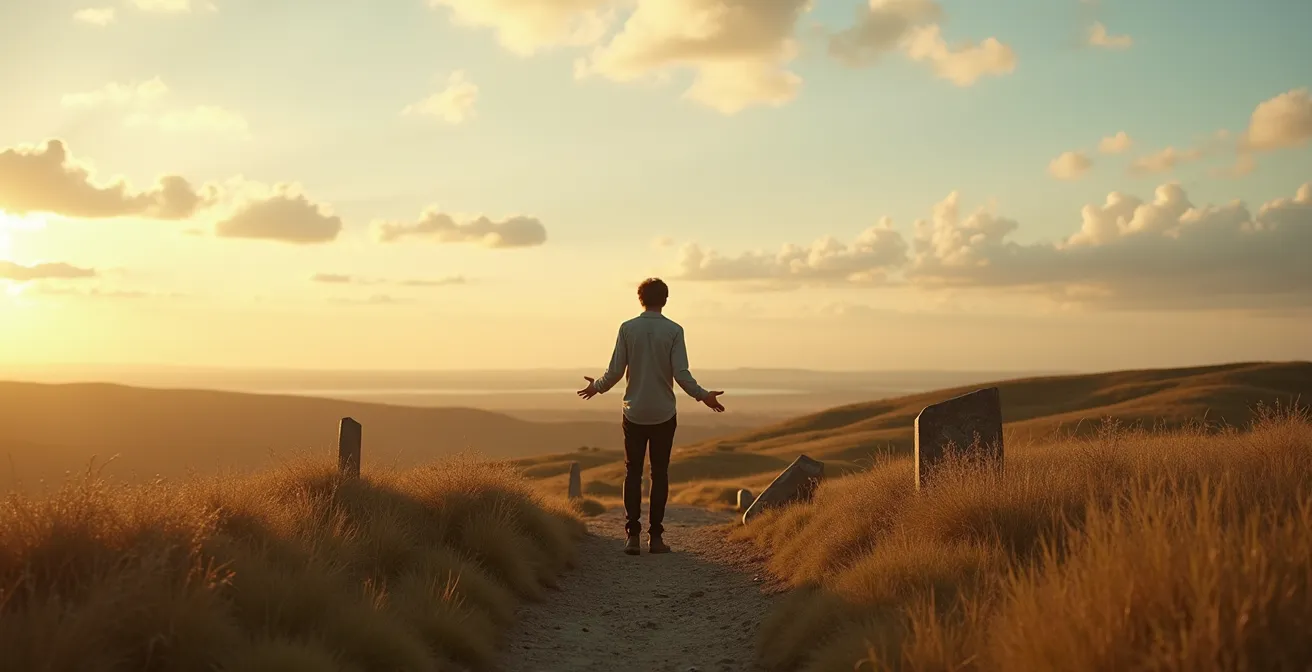
Visiting a historical site isn’t just about seeing where events happened; it’s a powerful act of cognitive encoding that textbooks can’t replicate.
- Your brain uses spatial memory to build a durable mental map of events, drastically improving retention and understanding.
- Purposefully designed experiences using gamification and narrative structure transform passive observation into an active, emotionally engaging quest.
Recommendation: Stop treating site visits as simple field trips. Start designing them as multi-sensory learning experiences to unlock a deeper, more empathetic understanding of history.
Every parent and teacher has seen it: the glazed-over eyes of a student staring at a history textbook. The dates, names, and events feel like a distant, abstract list to be memorized and quickly forgotten. The common solution is to plan a field trip, believing that simply seeing the place will “make history come alive.” While well-intentioned, this approach barely scratches the surface of what’s possible.
The true power of visiting a historical site doesn’t lie in just looking at old buildings or empty fields. It’s not about passively absorbing facts in a different location. The real magic happens at a much deeper, neurological level. What if the key to unlocking a permanent, meaningful connection to the past wasn’t just in what you see, but in how your brain processes the very act of being there? This is the power of embodied history—turning a physical space into a landscape of memory.
This guide moves beyond the clichés. We will explore the cognitive science that explains why on-site learning is so effective. We will delve into how to structure these visits to maximize engagement and transform them from passive tours into active, emotional, and unforgettable learning quests. From the order you visit sites to the way you stay hydrated, every detail can be engineered to create a more profound educational experience.
To help you craft these transformative experiences, this article is structured to answer the key questions behind effective historical site visits. The following summary outlines the journey we’re about to take.
Summary: A Cognitive Guide to Experiencing History
- Why Spatial Memory Increases History Retention by 40%?
- How to Gamify a Historical Site Visit so Kids Don’t Get Bored?
- Recorded Narratives vs. Live Q&A: Which Is Better for Deep Learning?
- The Hydration Plan You Need for Open-Air Archaeological Sites in Summer
- Why You Should Visit Sites in Chronological Order, Not Geographic?
- Star Wars Viewing Order: Which Sequence Makes the Most Narrative Sense?
- Why Finding a Name on a Census Record Triggers a Dopamine Response?
- Why Visiting Your Ancestral Home Changes Your Definition of “Self”?
Why Spatial Memory Increases History Retention by 40%?
Our brains are not designed to remember abstract facts in isolation. They are wired to remember information tied to a location. This is the principle of spatial memory, a powerful cognitive tool largely unused by traditional classroom learning. When you read about a battle in a book, the information is processed as semantic data. But when you stand on that battlefield, your brain engages its hippocampus, the region responsible for creating mental maps. Every fact, every story, is now anchored to a physical point in space, creating a rich, multi-layered memory.
This process of cognitive encoding turns abstract information into a durable, embodied experience. The slope of a hill is no longer just a word; it’s a physical reality that explains a tactical advantage. The distance between two points on a field becomes a tangible measure of a soldier’s grueling charge. This connection between information and place is incredibly powerful. While the title suggests a 40% boost, the effect can be even more dramatic. For instance, immersive learning environments have been shown to produce incredible gains in recall, with one study showing a staggering 92% retention rate after one week compared to traditional methods. The physical context acts as a scaffold for memory, making it easier to build and retrieve complex historical narratives.
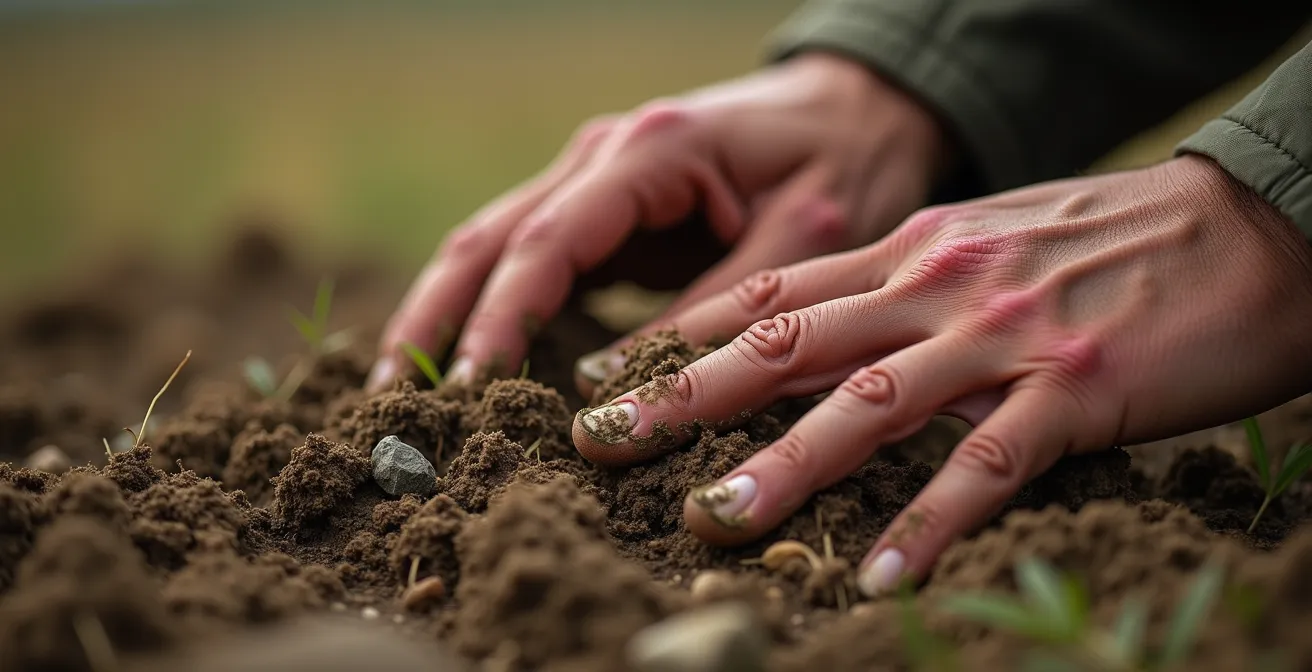
This is why the act of physically walking a historical site is so transformative. You are literally building a “memory palace”—an ancient mnemonic technique where information is mentally placed within a familiar physical space. By standing where history happened, you are not just learning facts; you are giving your brain the raw spatial and sensory data it needs to construct a lasting and meaningful understanding of the past.
How to Gamify a Historical Site Visit so Kids Don’t Get Bored?
The challenge for any parent or educator is bridging the gap between a student’s world and the historical context of a site. The fastest way to do this is to reframe the visit from a passive tour into an active game or a mission. Gamification isn’t about trivializing history; it’s about using game mechanics—like goals, rules, and rewards—to foster deep engagement and critical thinking.
Instead of a simple “look and listen” approach, you can assign roles. One child becomes the “Chief Cartographer,” responsible for mapping the group’s progress. Another is the “Story Collector,” tasked with finding three personal anecdotes about people who were there. These simple quests provide a sense of purpose and turn passive observation into an active hunt for information. You can also create “BINGO” cards with concepts to find, not just objects—like “evidence of nature reclaiming the land” or “a symbol of loss.” This encourages abstract thought and a deeper level of observation beyond just reading plaques.
The difference in learning outcomes between traditional methods and gamified experiences is significant. A structured, game-like approach not only boosts engagement but has a measurable impact on retention and analytical skills.
| Approach | Student Engagement Level | Knowledge Retention | Critical Thinking Development |
|---|---|---|---|
| Traditional Textbook Method | Baseline | Standard retention rates | Limited application |
| Gamified Historical Thinking | Significantly higher | Improved long-term retention | Enhanced analytical skills |
| Hybrid Approach with Physical Sites | Maximum engagement | Up to 92% retention after 1 week | Advanced perspective-taking |
Ultimately, gamification works because it provides structure and a sense of agency. By giving learners a clear objective and the freedom to pursue it, you empower them to construct their own understanding of the site. They are no longer just visitors; they are explorers and detectives on a mission to uncover the past.
Recorded Narratives vs. Live Q&A: Which Is Better for Deep Learning?
When visiting a historical site, we are often faced with a choice: listen to a pre-recorded audio guide or engage with a live tour guide. Each has its merits, but the most effective approach for deep learning is not an either/or but a strategic combination of both. This “flipped classroom” model leverages each format for what it does best, optimizing the learner’s cognitive load and creating space for genuine inquiry.
Pre-recorded narratives are ideal for delivering foundational, factual content. Listening to the “what, where, and when” before or while approaching a specific spot allows learners to absorb baseline information at their own pace. This frees up precious cognitive resources that would otherwise be spent trying to capture basic facts during a live presentation. By front-loading the facts, you prepare the mind for higher-level thinking.
Live Q&A with an expert guide then becomes the arena for deep learning. With the factual foundation already in place, the conversation can shift to the “why” and “how.” This is where learners can explore nuance, challenge assumptions, and connect historical events to broader themes. It moves the experience from information reception to active analysis and synthesis. However, even within a live discussion, one of the most powerful and overlooked tools is silence. As one group of researchers in educational psychology notes:
The most profound learning can come from a planned, 5-minute period of silent, individual observation to allow for personal reflection before any discussion begins.
– Educational Psychology Research, Gamifying Learning with AI: A Pathway to 21st-Century Skills
This planned pause for reflection allows for personal, emotional connections to form before the intellectual analysis begins. The ideal learning journey, therefore, is a three-step dance: absorb the facts with a recording, feel the space in a moment of quiet reflection, and then engage in a deep, question-driven dialogue.
The Hydration Plan You Need for Open-Air Archaeological Sites in Summer
It may seem like a mundane detail, but a strategic hydration plan is one of the most critical elements for a successful visit to an open-air historical site, especially in summer. Dehydration doesn’t just lead to physical fatigue; it significantly impairs cognitive function. Judgment, attention, and, most importantly, empathy are all diminished when you’re dehydrated. A well-hydrated brain is a prerequisite for a curious and receptive mind.
Instead of viewing hydration as a chore, frame it as “cognitive quenching”—a necessary step to maintain peak learning ability. This means planning for water breaks not as interruptions, but as integral parts of the educational experience. Before you even arrive, pre-map the site to identify shaded areas, benches, or visitor centers. These will be your “Oasis Points” for structured breaks. Scheduling these stops every 30-45 minutes aligns with natural attention spans and prevents mental fatigue from setting in.
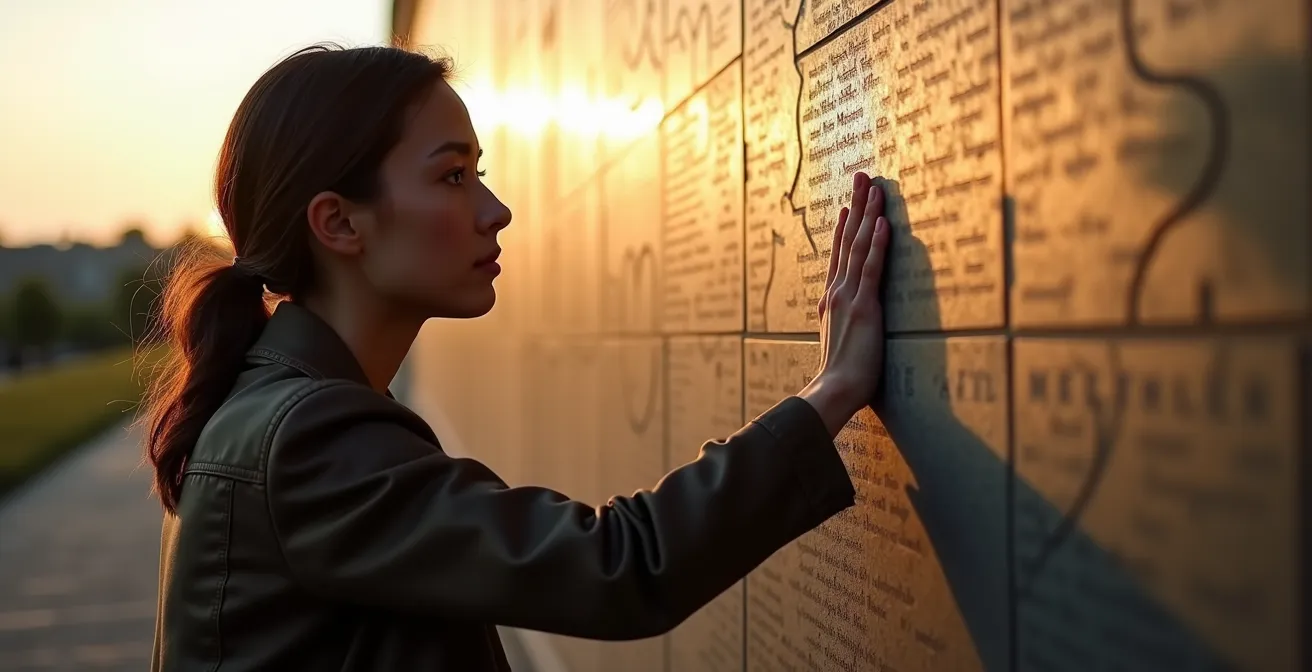
To deepen the experience, these breaks can be woven into the historical narrative. Use a historical canteen replica to discuss the logistical challenges of supplying water to armies or ancient communities. Turn each hydration stop into a mini-discussion point, a moment to process what was just seen and to pose questions for the next leg of the journey. This transforms a simple physical need into a valuable pedagogical tool.
Action Plan: Strategic Hydration for Peak Learning
- Pre-map ‘Oasis Points’: Identify all shaded areas, benches, and water fountains on the site map before your visit begins.
- Frame as ‘Cognitive Quenching’: Explain to your group that staying hydrated is essential for keeping brains sharp and ready to learn.
- Integrate into the Narrative: Use historical water canteens or discuss water logistics of the era to turn breaks into learning moments.
- Schedule Regular Stops: Plan a mandatory 5-minute hydration and reflection break every 30-45 minutes, regardless of thirst.
- Combine with Discussion: Use these planned pauses to encourage questions and process the information just covered.
Why You Should Visit Sites in Chronological Order, Not Geographic?
When planning a trip with multiple historical stops, the most common temptation is to plan the route based on geographic convenience. Drive to one area, see everything there, then move to the next. While efficient for travel time, this approach can be disastrous for learning. It creates a disjointed and confusing experience because history did not unfold according to geographic clusters; it unfolded as a linear, cause-and-effect narrative.
The human brain is wired to understand and remember stories. A compelling story has a clear beginning (causes), a middle (conflict/event), and an end (consequences). By visiting sites in chronological order, you allow learners to construct this mental narrative arc naturally. You start with the locations related to the origins of a conflict, move to the key battlefields or event sites, and conclude with the places that show the aftermath, like memorials or sites of treaty signings. This narrative structure makes the overall history lesson far more coherent and memorable. Each location builds upon the last, creating a powerful sense of momentum and understanding.
Expert-led battlefield tours have long demonstrated the power of this approach. They intentionally guide visitors along a chronological path, even if it means more driving between stops. They understand that the goal isn’t just to see places, but to understand a story. Jumping from the end of a story to the beginning simply because the sites are next to each other is like reading the chapters of a book out of order. You may see all the content, but you will miss the plot entirely. Prioritizing the narrative arc over the map is a fundamental shift that elevates a simple tour into a profound historical journey.
Star Wars Viewing Order: Which Sequence Makes the Most Narrative Sense?
What does the best order to watch the Star Wars saga have to do with visiting a battlefield? Everything, when it comes to the power of narrative structure. The long-running debate among fans—should you watch in release order, chronological order, or a fan-created “Machete Order”?—is fundamentally a discussion about how to construct the most emotionally and dramatically satisfying story. The same principles apply directly to how we experience history.
There is no single “correct” way to structure a historical visit, just as there is no single correct way to watch Star Wars. The best structure depends on the learning goal. Thinking in terms of these viewing orders gives us a powerful framework for designing historical tours:
- Release Order (IV-V-VI, then I-II-III): This is like visiting the most famous battle sites of a war first, then exploring the earlier political events that led to them. You start with the epic conclusion, then go back to understand the origins.
- Chronological Order (I-VI): This is the straightforward narrative we discussed previously. You follow the story from its beginning to its end, building a clear cause-and-effect understanding. This is ideal for building a foundational knowledge of an event.
- Machete Order (IV-V, II-III, then VI): This fan-favorite order preserves the big “I am your father” reveal in Episode V, then uses Episodes II and III as an extended flashback before concluding with Episode VI. In a historical context, you could visit a site where a critical decision was made, then “flashback” to the locations that explain the backstory of that decision, before finally visiting the site that shows its ultimate consequences. This creates dramatic tension and powerful reveals.
By consciously choosing a narrative structure, you transform a simple itinerary into a curated story. You can engineer “plot twists” by visiting a site that shows the outcome of a decision *before* visiting the location where the decision was made. This provokes curiosity and a deeper level of analytical thinking, as learners are forced to ask, “How did they get from here to there?”
Key Takeaways
- On-site learning leverages the brain’s innate spatial memory and emotional systems for superior retention that textbooks cannot match.
- Structuring a visit with deliberate gamification and a clear narrative arc is essential for transforming passive children into active, engaged learners.
- Personal connection, whether through finding a single name on a memorial or a quiet moment of reflection, is what turns abstract history into a powerful, personal story.
Why Finding a Name on a Census Record Triggers a Dopamine Response?
The thrill of genealogical research—the moment you find an ancestor’s name on a dusty census record or ship’s manifest—is a potent experience. That rush of discovery is a dopamine response, the brain’s reward for a successful search. This same neurological mechanism can be harnessed at historical sites like war memorials to make vast, impersonal numbers feel concrete and deeply personal. This is the art of manufacturing serendipity.
Our brains are not equipped to comprehend large-scale tragedy. The psychological concept of “psychic numbing” explains why hearing that millions have died is less emotionally impactful than hearing the story of a single person. Staring at a memorial wall covered in thousands of names can feel overwhelming and abstract. The key is to transform this overwhelming scale into a focused, personal quest.
Psychic numbing prevents us from grasping large-scale tragedy – finding one name is the brain’s way of rewarding you for finding a specific, relatable story.
– Cognitive Psychology Research, Human memory retention and recall processes
Before visiting a memorial, give each student a specific mission: find a soldier from their hometown, someone with the same last name, or someone who worked in a similar profession to a family member. This targeted search activates the brain’s reward system. The hunt itself creates anticipation, and the moment of discovery—finding that one specific name among thousands—triggers that same dopamine rush of genealogical discovery. That one name becomes an emotional anchor, a personal connection point to the entire historical event. The abstract loss of thousands suddenly becomes concrete through the story of one.
Why Visiting Your Ancestral Home Changes Your Definition of “Self”?
Visiting a place tied to your direct lineage—a grandparent’s village, the port your ancestors departed from—can be a deeply moving experience that expands your definition of “self.” It connects your personal story to a physical place and a longer timeline. However, this powerful phenomenon is not limited to blood relatives. Sites of profound collective importance, like major battlefields or national monuments, function as the “ancestral homes” of our shared modern identity.
Standing on a field like Gettysburg or Normandy connects you to a larger cultural and historical family. The principles of spatial narrative and emotional anchoring we’ve explored come together here. You are physically situated within a story that, while not genetically yours, is foundational to the world you inhabit. This experience expands your self-definition beyond individual lineage to include your place within a nation’s story, a story of human struggle, or a fight for an ideal.
These places are more than just tourist attractions; they are carefully preserved landscapes of memory. The work of organizations dedicated to their protection ensures that future generations can have this same transformative experience. For example, in the United States alone, the American Battlefield Trust has protected more than 58,000 acres across 155 sites, safeguarding the physical stages where these national stories unfolded. Visiting them is an act of participation in a collective memory.
By understanding the cognitive and emotional forces at play, you can plan your next historical visit not just as a trip, but as a carefully crafted journey. The ultimate goal is to move beyond memorizing facts and instead build a lasting, empathetic, and personal connection to the human stories that shape our world. Start planning your next expedition today, armed with the tools to make it a truly transformative experience.